Make your Docs and SDKs agent-ready
Auto-generated llms.txt, an MCP server, and typed SDKs so agents get the right answer the first time.
Shipping agent-ready docs with Fern
The invisible audience is already here
Agent discovery is the new search. Developers find your API through Claude, Cursor, and ChatGPT. If an agent can't parse your docs or call your SDK, those developers get a hallucinated answer or nothing at all. No error log, no bounce rate, just integrations that never get built.


Agents find your docs
Without an llms.txt, an agent approaching your docs cold may find the right page or it may hallucinate one based on similar APIs in its training data. Fern generates a structured index from day one.
Agents fit your pages in their context
JavaScript-rendered docs return an empty shell. Auth walls return a login form instead of a 401. Bloated HTML burns the token budget. Fern serves clean markdown, sized to fit.
Agents act, not just summarize
MCP server, typed SDKs, and runnable examples turn your docs from reference material into something an agent can execute on behalf of a developer.
How Fern makes you agent-ready
Your agent surface is your spec, your Docs, your SDKs, your CLI, and your MCP server. Fern generates all of it from one source of truth, so the surfaces never disagree.
llms.txt and llms-full.txt, generated for you
Every Fern Docs site ships a hierarchical index agents can crawl, with per-page descriptions pulled straight from your frontmatter. 73% of top API docs sites still ship without one.
MCP server in one click
Expose your docs and API as a Model Context Protocol server so Claude, Cursor, and Copilot call your endpoints directly. Developers connect once and the agent does the rest.
Fern SDKs handle pagination automatically — list endpoints return an async iterator you can loop over directly.
Ask Fern in your docs
A RAG-backed assistant grounded in your spec and pages with chunking, vector retrieval, RBAC filtering, and keyword fallback. Answers cite the source so developers verify, not guess.
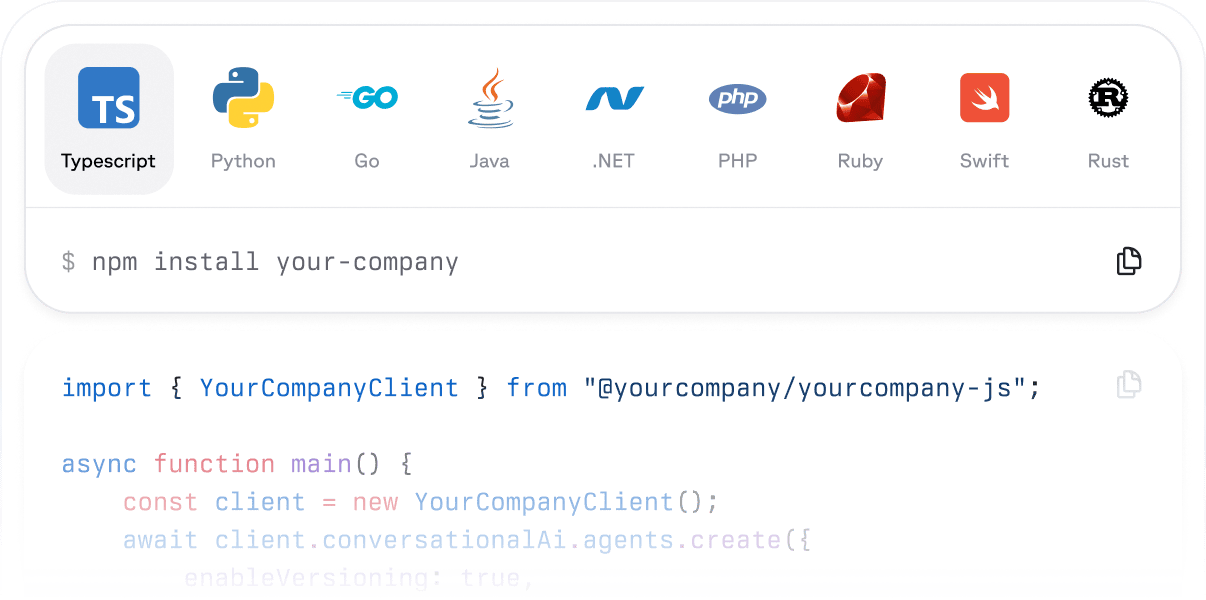
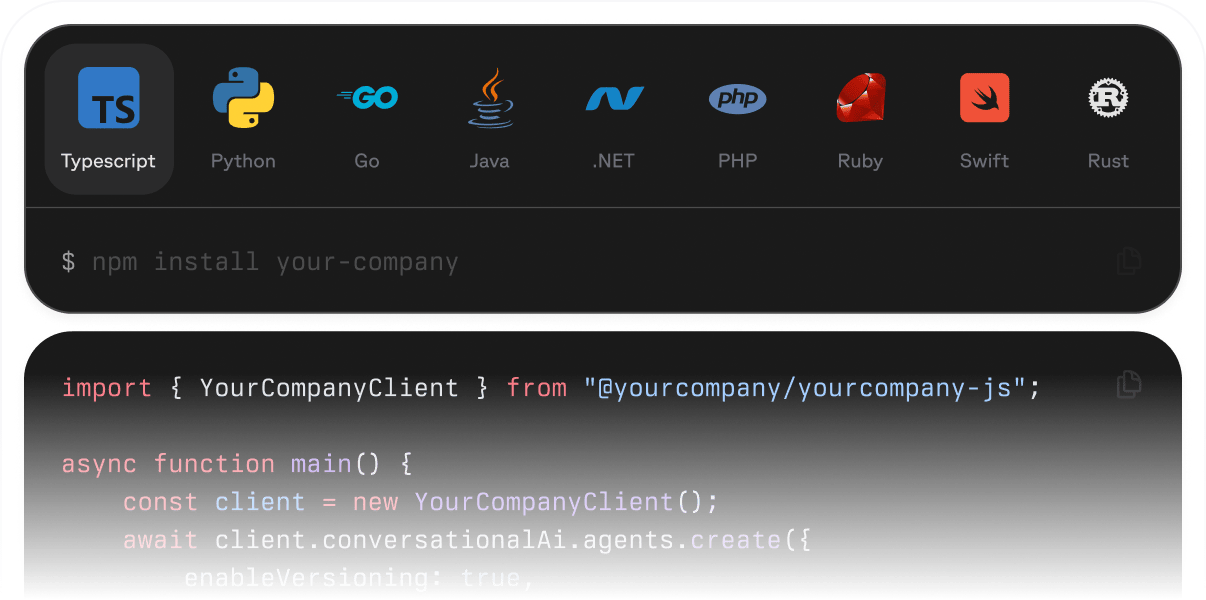
SDKs agents can call without hallucinating
Typed methods, @example JSDoc on every endpoint, discriminated unions, and forward-compatible enums. Agents read the types and write code that compiles on the first try.
A CLI that pipes into the next call
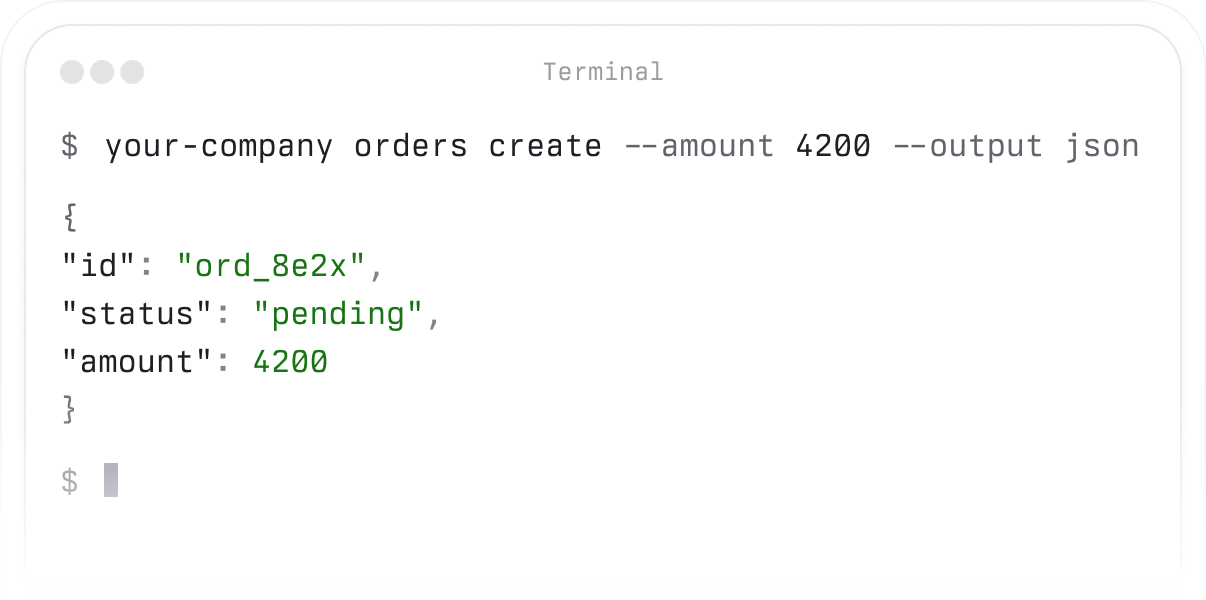
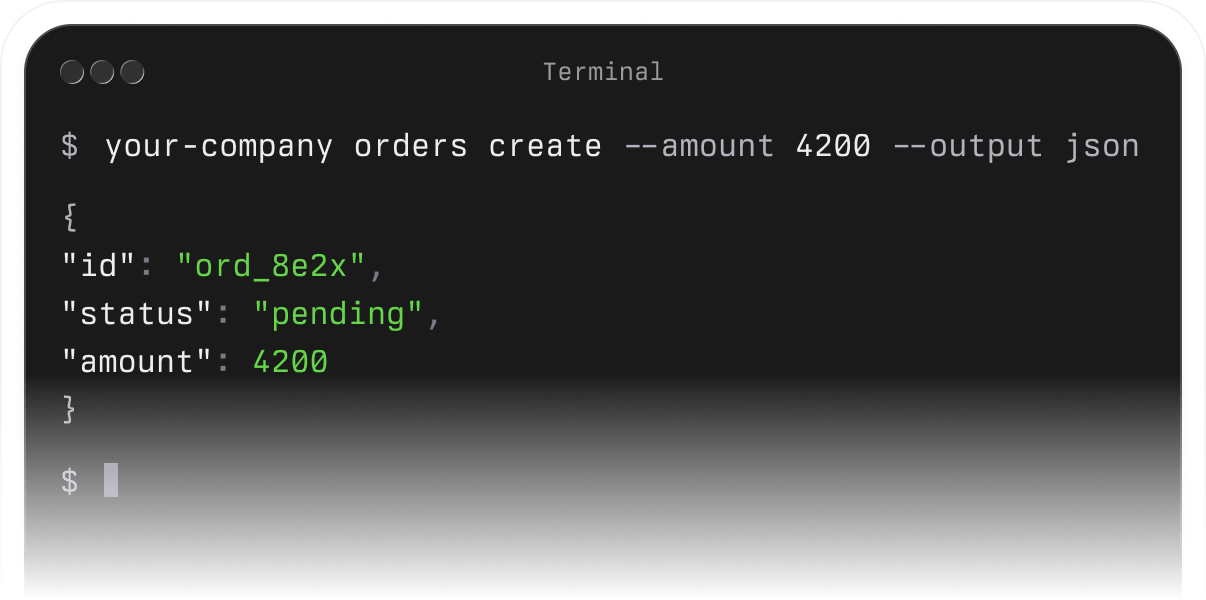
Every command speaks JSON, so an agent chains one call into the next instead of parsing prose. Resources become subcommands, generated from the same spec as your SDKs.
The level of support we receive from Fern is unparalleled; it feels like working with a local internal team rather than an external vendor. Fern's rapid turnaround on complex features demonstrates a deep commitment to our technical success and a true partnership in building our developer ecosystem.
Corey WeathersDeveloper Relations Lead, Deepgram
Agent Score
We built the benchmark for agent-ready docs
Fern Labs partnered with Dachary Carey, creator of the AFDocs standard, to build Agent Score: an open-source benchmark that grades any docs URL 0 to 100 across 22 checks. We run it on our own platform every week and ship the fixes upstream, so every team on Fern moves with the agent ecosystem instead of catching up to it.
Fern is a Postman company, and the two scores stack. Postman grades your whole API surface with API Agent Score. Agent Score goes deep on the docs layer against AFDocs. Run both.
Seven places agents break on an API
Discovery
The agent picks the wrong endpoint out of a set of similar ones.
llms.txt, clean markdown on every page, and an MCP server that lists your endpoints as callable tools.
Schema
The agent guesses at a request body and the API rejects it.
Typed methods, discriminated unions, and @example JSDoc, so the shape is readable before the first call.
Authentication
A token expires mid-session and the agent never recovers.
First-class OAuth in every generated SDK, including automatic refresh on expired credentials.
Error recovery
A transient 5xx ends the run instead of triggering a retry.
Retries with exponential backoff and idempotency keys, on by default in all 9 languages.
Pagination
The agent reads page one and reports it as the whole result.
Auto-pagination across offset, cursor, and link-based endpoints, so the SDK walks to the last page.
Multistep
State from the third call goes missing by the eleventh.
Every CLI command speaks JSON, so an agent pipes one verified result straight into the next call.
Statefulness
The agent reports a write that never actually persisted.
This one belongs to your API. Fern makes the read path that confirms it typed and discoverable.
Common questions about agent-ready Docs and SDKs
Want the full write-up? Read how we built Agent Score.
Make your Docs and SDKs agent-ready
Book a demo and a Fern engineer shows you how your Docs and SDKs get agent-ready: llms.txt, an MCP server, Ask Fern, and typed SDKs generated from your spec. No sales pitch, no slide deck.